
Cameron Parish Criminal Court Cases
The Thirty-Eighth Judicial District Court is Cameron Parish's primary criminal trial court. It hears felonies and district-court misdemeanors within its jurisdiction. Louisiana does not use a universal Class A, B, or C felony ladder. Under Louisiana Revised Statute 14:2, a felony is an offense punishable by death or imprisonment at hard labor. Each offense statute supplies the actual penalty range. A short charge label alone may not reveal the grade, especially after an amendment or sentencing enhancement.
Cameron Parish has no incorporated municipality, so there is no city municipal-court docket to search. The district clerk holds the case number, charging papers, minutes, judgment, sentence, and certified copies. The sheriff separately holds booking and agency records. Justice-of-the-peace courts are not felony courts. The Louisiana Supreme Court judiciary entry point identifies the wider court system.
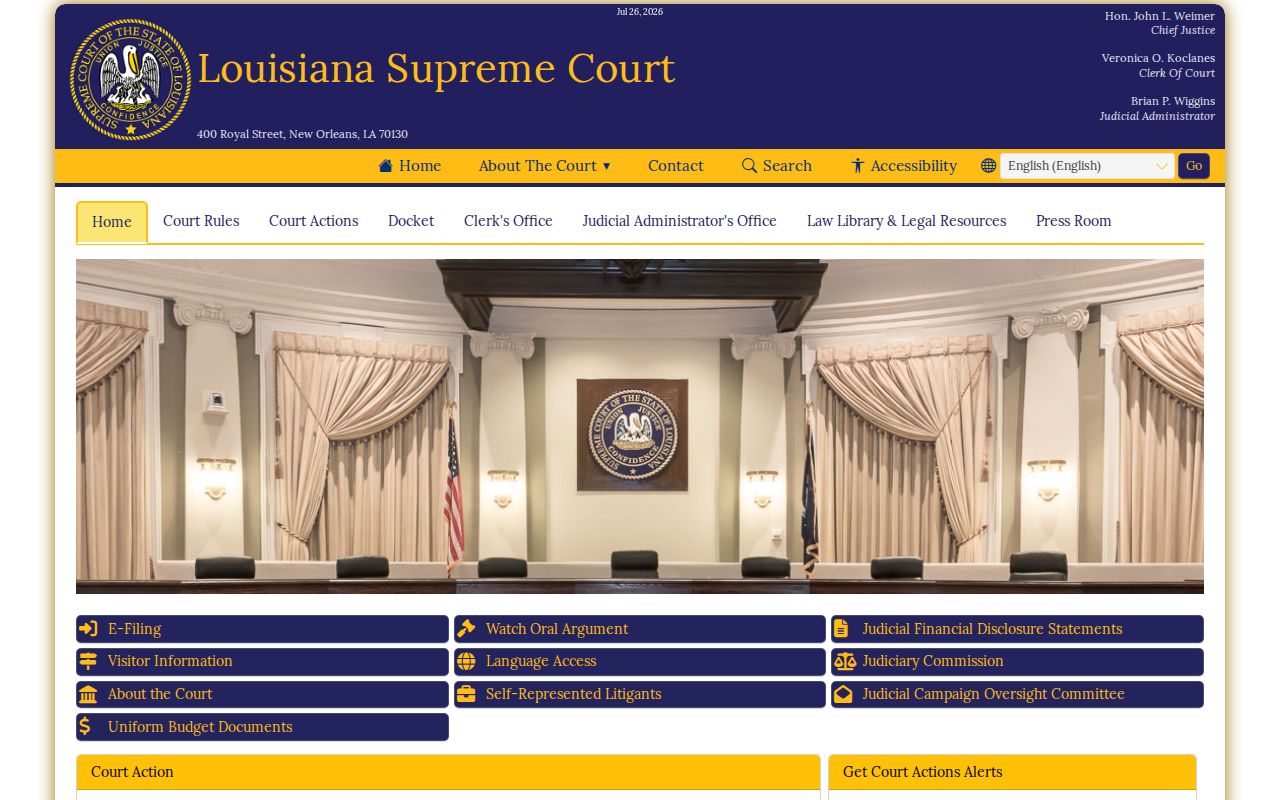
That statewide entry point gives court context, while the Cameron Parish Clerk remains the source for the local file.
Finding the Cameron Parish Clerk
The current Louisiana Secretary of State clerk directory lists the Cameron Parish Clerk of Court at 119 Smith Circle, Cameron, LA 70631. The mailing address is P.O. Box 549, Cameron, LA 70631. Call 337-775-5316 or fax 337-775-7172. Another state source retains 122 Recreation Center Lane as an older or alternate address, so confirm the counter location before making the long trip across this coastal parish.
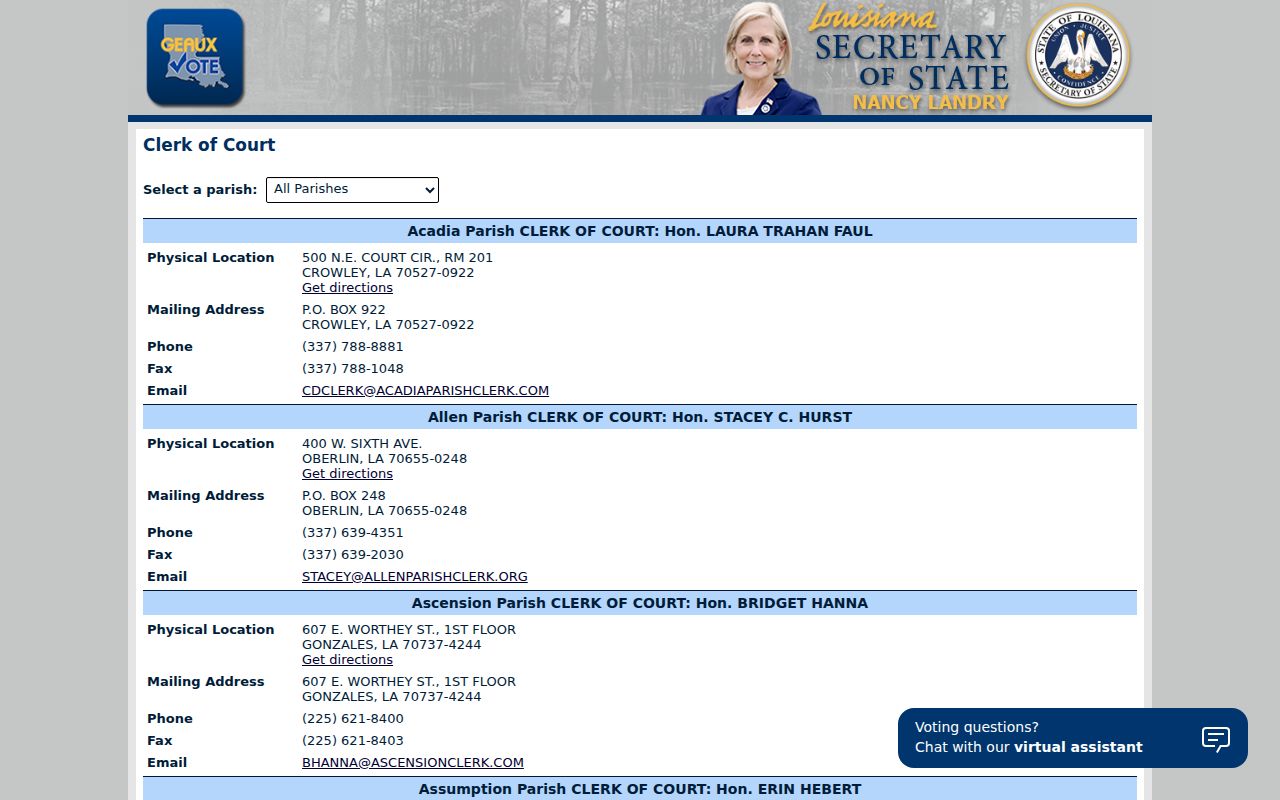
The directory provides the official contact route for docket searches, copy estimates, and certified court records.
Counter, phone, and mail are all valid access channels. Ask whether an older Cameron Parish criminal case is on paper, microfilm, archived, or stored offsite. For mail, provide the full name, any aliases, date of birth if appropriate, estimated filing year, case number if known, and return contact information. Ask for a cost estimate and accepted payment method before sending funds. Current search, copy, and certification charges were not confirmed in the research, so no flat local fee should be assumed.
Searching Cameron Parish Case Records
The Louisiana Clerks' Remote Access Authority portal, or LCRAA, is shared infrastructure for participating parish clerks. Coverage, index years, subscriptions, fees, and document images can differ by parish and module. Treat a Cameron result as an index lead until the clerk confirms the court file and disposition.
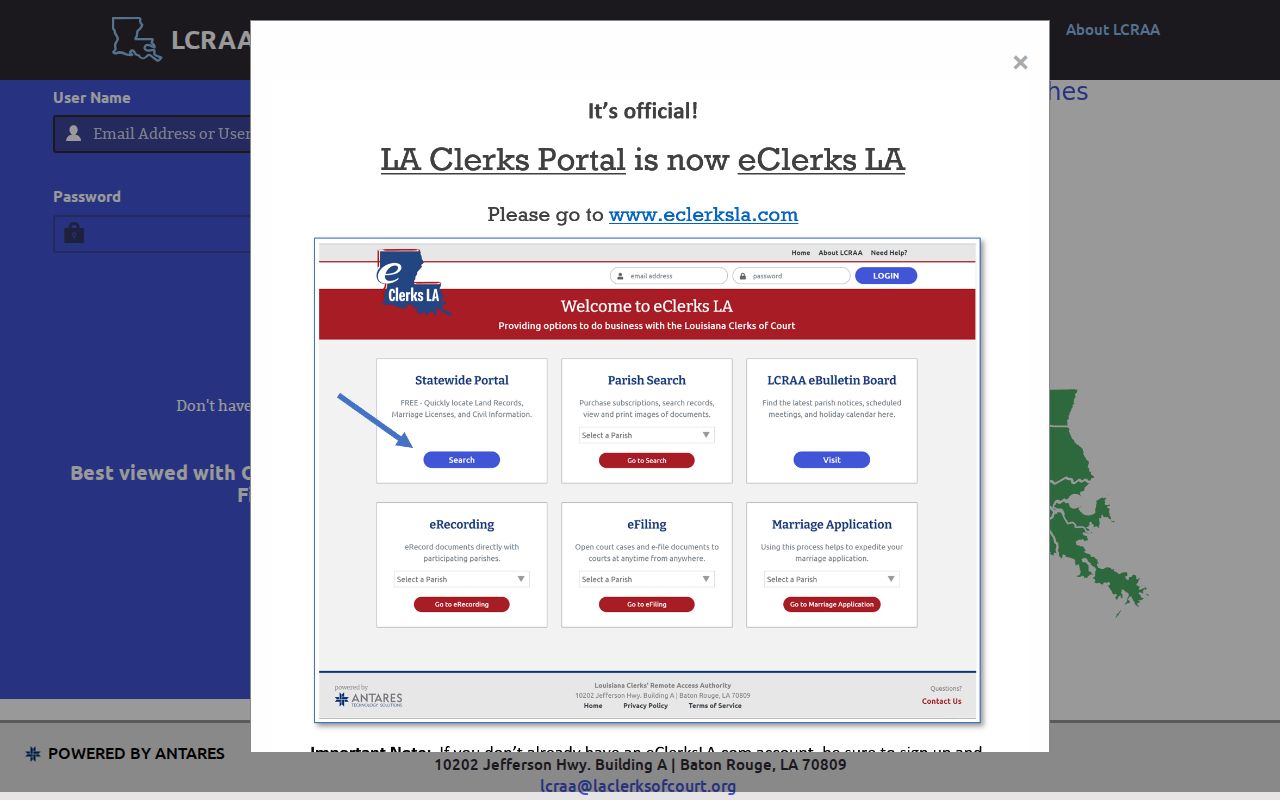
The portal can narrow a search, but it does not promise that every Cameron pleading is downloadable.
- Open LCRAA and select Cameron Parish if the criminal module is available.
- Choose the case module, then search by party name or the clerk's exact case number.
- Use a filing-year or date range to reduce false matches and name variants.
- Read the event list from filing through plea, judgment, and sentence.
- Contact the Cameron clerk for missing images, certified copies, or an older file.
| Field Label | Type | Required | Notes |
|---|---|---|---|
| Parish | Dropdown | Yes | Select Cameron when its module is offered. |
| Case module | Menu | Yes | Choose criminal rather than another clerk index. |
| Party name | Text | One route | Try known spelling and name variants. |
| Case number | Text | Alternate | Use the exact clerk format. |
| Date range | Dates | No | Narrows common names and filing years. |
Cameron Court and Booking Keys
A court case number, booking number, and state identification number are not interchangeable. The Cameron clerk assigns the court number to a prosecution. The sheriff or jail uses a booking identifier for intake. Louisiana BCII links qualifying fingerprint-supported events through state repository identifiers. Give each custodian the key it uses. If only a booking number is known, use the defendant's name and arrest date to help the clerk locate any later-filed case.
A Louisiana rap sheet is also not the Cameron Parish court file. The repository history may list an arrest cycle, agency, charges, and a reported disposition, but it does not reproduce every motion, minute, or judgment. When a BCII response lacks a disposition, a certified Cameron clerk disposition may support a record challenge. Conversely, a docket hit shows that a case was filed, not that the person was convicted.
Inside a Cameron Parish Case File
Start with the docket number and chronological minutes. The charging instrument may be a bill of information or another authorized filing. Compare its counts with later amendments and the final judgment. A docket can show accusations, dismissed counts, pleas, trial events, and sentencing in one sequence, so reading only the first charge gives an incomplete and sometimes wrong result.
| Case Number & Court | The clerk's identifier, filing date, 38th JDC division, status, and judge. |
|---|---|
| Charging Document | Filed counts, cited statutes, grade, and later amendments or dismissals. |
| Docket Entries | Dated minutes for filing, arraignment, pleas, motions, trial, and judgment. |
| Hearing Dates | Scheduled date, time, and courtroom when publicly available. |
| Disposition & Judgment | The outcome for each count, including dismissal, plea, acquittal, or conviction. |
| Sentence & Conditions | Custody term, probation, fines, costs, and conditions entered by the court. |
Louisiana Revised Statute 13:5992 supports public criminal minute summaries for qualifying cases filed from January 1, 2020. Expected fields can include arrest or summons, bail, filing, amendment, dismissal, hearings, adjudication, guilt decision, and sentence by count. The law does not require a complete image set for every pleading and does not cover traffic matters.
Reading Cameron Charge Amendments
A sheriff booking label records the basis stated at intake. The district attorney may accept, reject, or amend that charge before filing a bill of information. Cameron Parish criminal court records then track the prosecution actually brought in the 38th JDC. Read the original count, each amendment, and the count-level disposition together. “Theft,” for example, cannot be graded from the word alone because Louisiana Revised Statute 14:67 changes punishment by value and other facts.
The district attorney's investigative material and work product may be restricted, while pleadings filed in court belong with the clerk. The public defender's client file is confidential and is not a public case-record source. For proof of the outcome, request the judgment, sentence, or certified disposition from the clerk rather than relying on either attorney's office or a booking log.
How a Criminal Case Moves
After arrest and booking, the prosecutor decides what counts to file. Arraignment records the defendant's plea. Motions and hearings resolve pretrial issues, while a plea or trial leads to a disposition. Sentencing may occur with the disposition or later. The minutes can also show bond events, warrants or capias entries, probation, revocation, and appeal activity. No fixed Cameron Parish timeline applies to every prosecution because case complexity, custody, hearings, and court orders change the pace.
Case flow: Arrest › Booking › Charges › Arraignment › Disposition › Sentencing
Check the most recent minute before treating a scheduled event as completed. A hearing date can move, a count can change, and a warrant entry is not a final judgment. The filed disposition controls the public result.
Cameron Federal Criminal Cases
A federal Cameron matter belongs to the U.S. District Court for the Western District of Louisiana, not the 38th JDC. Confirm the assigned division from the case instead of assuming the nearest courthouse. The Western District lists a Lake Charles courthouse at 611 Broad Street, Lake Charles, LA 70601, with court telephone 337-437-3870.
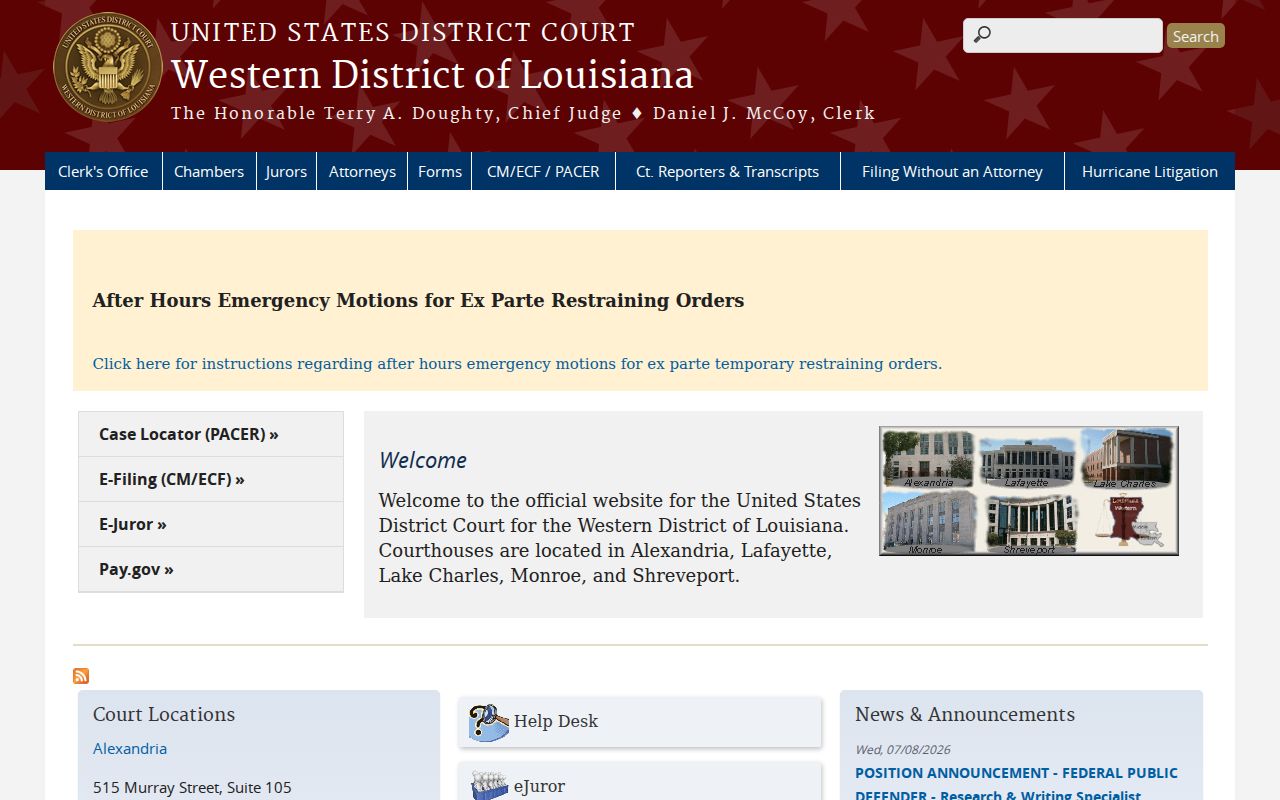
The district site supplies official courthouse and division information for federal filings tied to Cameron Parish.
Federal dockets and available documents are searched through PACER after registration. Search by party or case number, then verify the assigned court and docket entries.
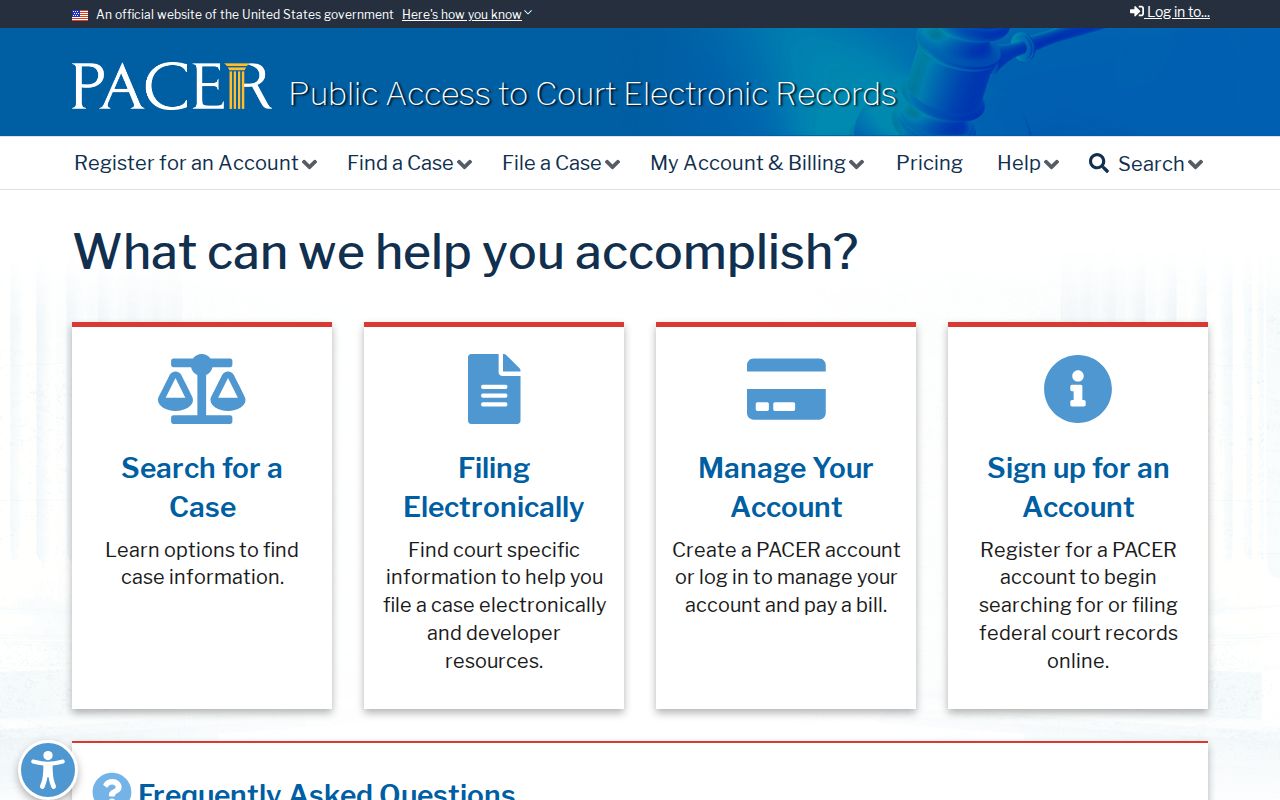
PACER is the federal access channel; it does not contain Cameron Parish district-court cases. Current fees should be checked on PACER before ordering documents.
Case Record Access & Restrictions
Louisiana's constitution and Public Records Law favor access, but specific law can restrict parts of a file. Juvenile material, grand-jury matters, sealed warrants or indictments, sensitive victim information, medical data, and protected personal identifiers may be withheld or redacted. Louisiana Revised Statute 44:3 also protects defined law-enforcement material tied to pending criminal litigation or investigation, as well as intelligence, informant, and security information. It is not a permanent blanket exemption for all records about an arrest.
An online view may contain fewer details than the courthouse file. If a Cameron Parish case does not appear, ask the clerk to check spelling variants, older indexes, archived storage, and whether a seal or expungement order affects public access. Request segregable, nonexempt portions when only part of a record is protected. Court files, sheriff reports, and BCII histories follow different disclosure rules even when they describe the same event.
Cameron Expungement Is Confidentiality
Louisiana expungement removes covered records from public access; it does not destroy the government record. The motion is filed in the court where the record arose, which means the Cameron Parish Clerk for a 38th JDC case. Eligibility depends on the arrest, disposition, offense, waiting period, and exclusions. The official felony expungement statute excludes many crimes of violence and sex or minor-victim offenses, subject to its exact terms.
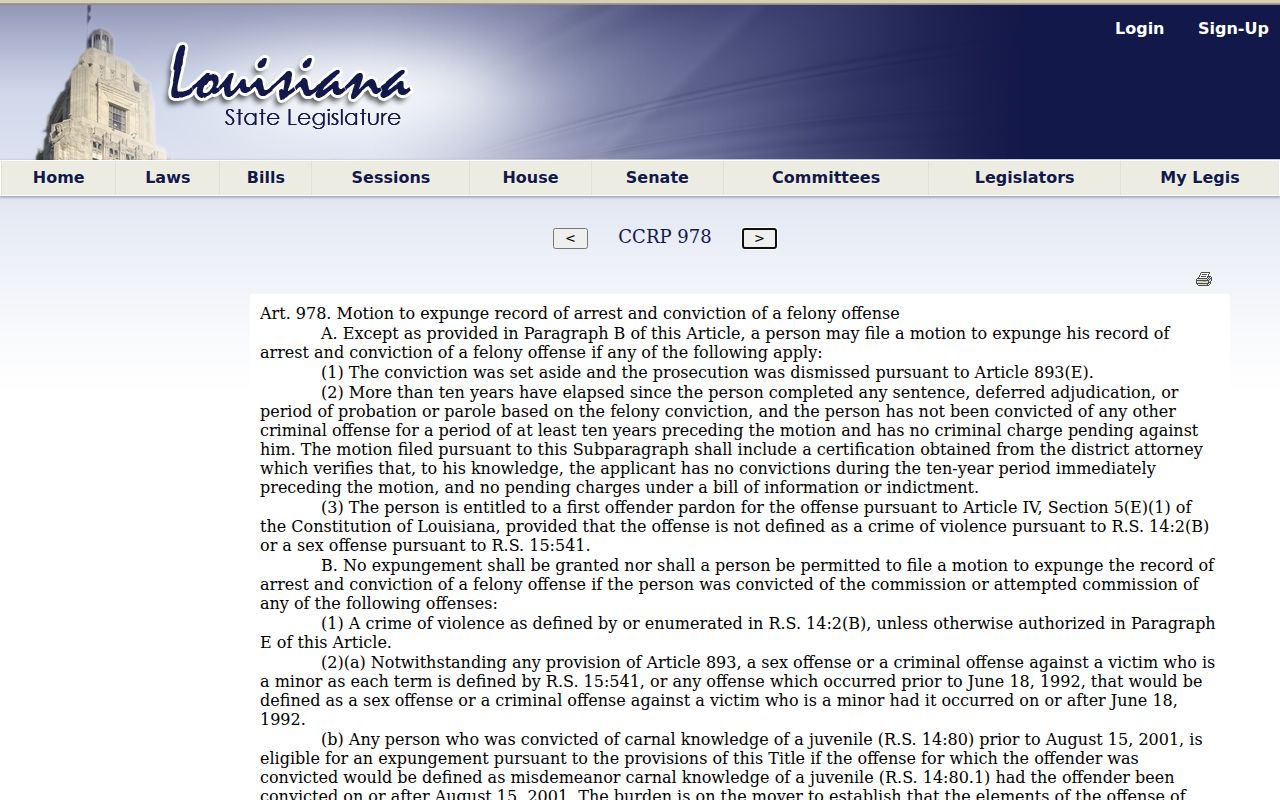
The statute should be read with the court disposition and current law; a docket label alone cannot establish eligibility.